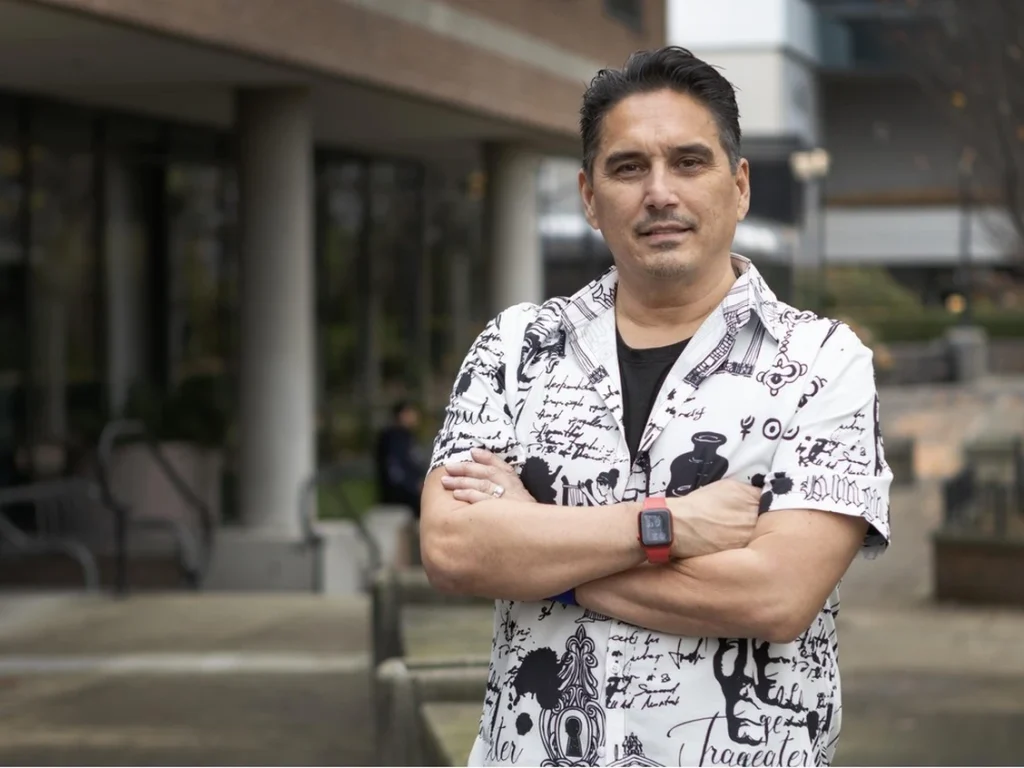
David Delorme, district principal for Vancouver’s Indigenous students, worries that the education for some of his students is being held back by a lack of food, clothing and basic necessities.
‘Providing gift cards, food and emergency support to children and families is a meaningful and strategic way to promote equity, wellbeing and educational success’ — David Delorme, district principal for Vancouver’s Indigenous students
“You go to a store and it’s a $100 trip, and you don’t really leave with a lot of food,” said Delorme. “Money doesn’t go as far as it used to.”
The Vancouver school district’s Indigenous education department oversees 2,099 students of First Nations, Métis and Inuit ancestry.
“Some families face systemic barriers and socio-economic challenges that impact their ability to fully engage in school and community life,” said Delorme.
His department tries to help families struggling with the cost-of-living crisis by offering relief during times of hardship. It’s a means to reduce stress and promote their overall well-being, he explained.
The support comes in the form of gift cards distributed to families for food, clothing and necessities or emergency funds.
But the demand for help has increased and Delorme said his department needs more resources so it can expand its “capacity to respond to urgent requests for food support, emergency housing, transportation and other essential services.”
To achieve this Delorme is asking the Vancouver Sun’s Adopt-A-School campaign for $20,000 so it can assist some students and families during times of financial crisis.
“We are implementing a district-wide strategy focused on addressing emergency requests, food insecurity and urgent financial needs,” he said.
“Emergency situations such as housing instability, transportation barriers or sudden financial hardship will be managed through a centralized intake system and a rapid response team.”
His department has 27 Indigenous education workers and 11 teachers in Vancouver’s 89 elementary and 18 secondary schools.
“Providing gift cards, food and emergency support to children and families is a meaningful and strategic way to promote equity, wellbeing and educational success,” he said.
“These supports help meet immediate needs such as hunger, housing instability and financial stress, while also fostering long-term resilience and trust.
“When basic needs are met, children are more likely to attend school consistently, engage in learning and perform better academically. They are also less likely to experience behavioural challenges or emotional distress,” he said.
“Over time, these supports contribute to breaking cycles of poverty and trauma, promoting healthier families … ultimately providing these resources reflects a commitment to justice and the belief that every child deserves the opportunity to succeed.”
The Vancouver Sun Children’s Fund, is a registered charity which administers Adopt-A-School. Since 2011, more than $15 million in aid has been sent to schools across the province to help impoverished children and families. Money that was raised through the donations of generous Sun readers.
The money is used to feed children arriving at school hungry or provide them with clothes and other basic needs.
No administration fees are deducted from Adopt-A-School donations. One hundred per cent of donations are reserved for schools.
How to donate
1. ONLINE: Donate online with a credit card at www.vansunkidsfund.ca
2. PHONE: To pay by credit card, call 604-813-8673.
By Gerry Bellett (gbellett@gmail.com)